Behind the Intelligence: What is Natural Language Processing (NLP) and How Does it Work in Our AI Software

AlthoughNatural Language Processing (NLP)might sound distant and complex, the truth is that we use NLP in our daily lives without realizing it, perhaps dozens of times each day. Especially in the business world, entrepreneurs and marketers widely use NLP as a tool for digital marketing.
Whether it's reading messages on your phone, searching for information on Google, using Alexa or Siri with voice commands, or usingChatbot systems, all of these involve NLP and help make our daily lives more convenient. This technology is particularly important in the online business sector andDigital Marketing.
What is Natural Language Processing (NLP)?
Natural Language Processing (NLP) is a branch of computer science and an important component ofAI technologythat enables computers to interpret and understand human language. This allows computers to communicate and analyze data in a way that resembles human language.
Generally, NLP is based on computational linguistics, rule-based modeling of human language, Deep Learning and Machine Learning models, as well as various statistical principles.
Why is NLP Important for Modern Business?
NLP plays a crucial role in efficiently analyzing data, text, and speech. This system can accurately distinguish between regional dialects, slang, and nonstandard grammar used in everyday conversations.
Today, organizations use languageanalysis softwarelike NLP to process voice and text data across various communication channels, such as:
- Social media.
- VDO
- Voice messages
Additionally, NLP helps analyze sentiment or intent in messages and respond to humans in real-time, helping businesses better understand their customers.
Interestingly, NLP can be applied to customer contact applications, such asChatbots,which can analyze and classify customer needs to answer questions automatically and route complex questions to customer support teams. This automation helps reduce costs, decrease staff requirements, and save time from answering repetitive questions, while increasing customer satisfaction.
Benefits of NLP You May Not Know About
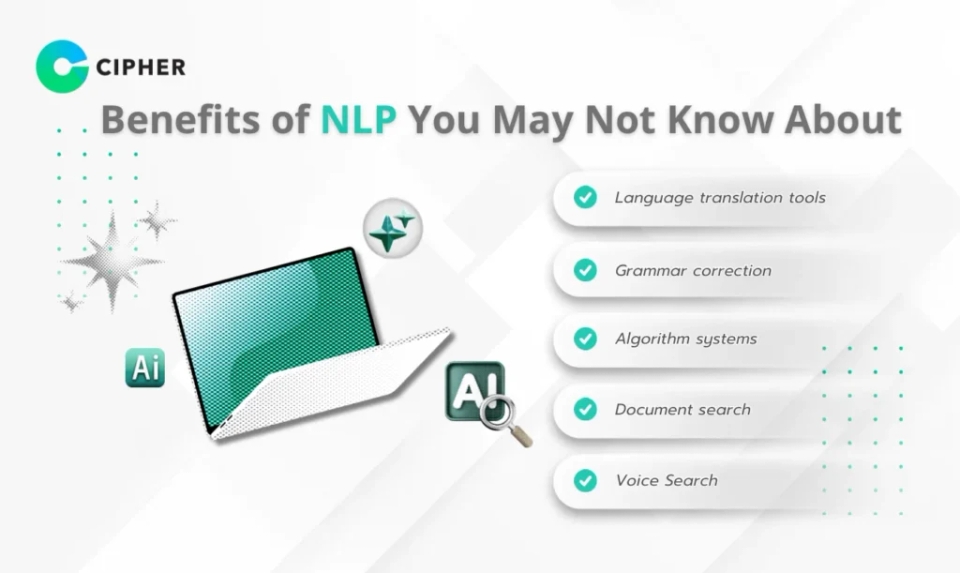
NLP technology has become a bigger part of our daily lives than we might realize. Let's look at some of the benefits we're already using:
- Language translationtools like Google Translate not only translate languages correctly by sentence or vocabulary but can also arrange words elegantly, similar to human writing.
- Grammar correctionor accurate word processing in programs like Microsoft Word or Google Docs helps make writing more efficient.
- Algorithm systemsthat can understand human language, such as Google's BERT, which works by capturing important keywords in sentences.
- Document searchon Google Docs that is fast and accurate, saving time in finding information.
- Voice Searchwith human-computer communication like Siri, where the program interacts with users naturally.
NLP technology also includesAI meeting transcription,which helps make recording and summarizing key points in meetings more efficient.
How NLP Works: Understanding Computational Linguistics Simply
Natural language processing works through different levels based on linguistic components, allowing computers to systematically process human language. Each level has different complexity and functions:
Phonology - Sound Analysis
Phonology is the study of sounds in language. In NLP systems, this component analyzes and processes speech to convert it into data that computers can understand using speech recognition systems.
The system analyzes sound waves spoken by humans, identifies phonemes, and converts them into text. It must handle various challenges such as different accents, background noise, and speaking speed.
Morphology - Word Structure
Morphology deals with word structure and how words are formed. In NLP, this component analyzes root words, prefixes, and suffixes to understand the basic meaning of words, allowing computers to distinguish word meanings in different contexts.
Syntax - Sentence Structure
Syntax involves sentence structure and the relationships between words in sentences. NLP systems analyze what function each word serves in a sentence, such as subject, verb, or object, to understand grammatical structure. Syntax analysis often uses parse tree models to show relationships between different parts of a sentence, helping computers understand how that sentence conveys meaning.
Semantics - Word and Sentence Meaning
Semantics relates to the meaning of words and sentences. This is the stage where NLP systems try to understand what a text is communicating, not just its grammatical structure.
Techniques used in semantic analysis include creating Word Embedding models that convert words into vectors in higher dimensions, placing words with similar meanings closer together in that vector space. This technique helps computers better understand semantic relationships between words.
Pragmatics - Context and Intention
Pragmatics is the highest level of language analysis, dealing with context, intention, and implied meanings beyond the words themselves. NLP systems try to understand why a speaker or writer chose to use specific words or sentences, making the system's responses more natural and understanding the user's true needs.

Differences Between NLP, AI, and Machine Learning You Should Know
NLP, AI, and Machine Learning may be categorized as similar technology groups, but there are important differences between them. We can separate them into three parts:
- Artificial Intelligence (AI)refers to technologies that help make computers or machines smarter, capable of performing complex tasks similar to humans. Developing AI Software is one of the services many organizations seek today.
- Machine Learningis a subset of artificial intelligence that can learn by itself without needing data input or human intervention. The system learns from data and can improve itself.
- Deep Learningis deep-level learning, a subset of large data systems with the ability to analyze complex data and has a structure similar to human neural cells.
NLP is classified as part of AI that specifically focuses on natural language processing, and often uses Machine Learning and Deep Learning techniques to improve system efficiency.
How NLP Affects Digital Marketing
In terms of business andonline marketing,NLP helps target audiences understand what brands want to communicate, whether through content, advertising, or analyzing data from marketing measurements. Here's how NLP helps online businesses:
1. Helps Brands Understand Customers More Deeply
Whether your brand is not a large organization or is a startup just beginning business, you can apply NLP technology to achieve maximum marketing efficiency.
Brands can use NLP to find reviews or feedback from customers who use their products and services online. NLP systems analyze articles with content related to the brand, letting you know what customers or people online think about your brand, helping you improve services precisely.
2. Create Chatbot Programs for Customer Service and Lead Generation
Today, entrepreneurs no longer need to answer customer questions 24 hours a day. Simply install a Chatbot system so customers can inquire about basic details without waiting.
Moreover, investing in aChatbot systemonce can be used for business in the long term, without spending budget on hiring many employees, and can provide service 24 hours a day
3. Create Copywriting That Appeals to Readers
In the past, who would have thought computers could create content that seems natural, as if written by humans? In this digital age, NLP can create copywriting to effectively explain and recommend products on websites.
Large brands like Alibaba have AI systems for writing content describing product details on their website, saving humans time writing copywriting for hundreds of pages and helping large businesses manage large amounts of data efficiently.
4. Helps Make Voice Search More Effective
Voice Search technology using NLP is growing rapidly. Did you know that in 2020, more than 75% of American consumers had smart speakers in their homes?
Smart speaker users benefit by searching for things through voice search, such as asking about weather forecasts or traffic routes. Brands producing smart speakers have been highly successful, and businesses can adapt to this voice search behavior by improving their SEO to support voice search.
5. Can Analyze Usage Trends Coming in the Future
You may have used other tools to gather news or RSS feeds* to search for general information related to specific brand products and services. NLP has methods to compile this information and summarize key points for you as well, and can even do so in separate categories for easier classification.
(RSS: Really Simple Syndication is data in XML format that can be used for news distribution via websites and blogs. RSS helps us receive information from various websites providing data services more quickly.)
Examples of Successful NLP Applications in Business
Natural Language Processing (NLP) is behind the intelligence of modern applications in the real world. Here are examples of applications that create results for businesses:
- Machine Translation:Like Google Translate, this is an example of NLP technology widely used today. It's not just about translating from one language to another, but effective translation must interpret and understand the tone of the input language correctly and translate it into text with the same meaning, making it easier for businesses to expand into foreign markets.
- Text summarization:This uses NLP techniques to digest large amounts of digital text at once and create summaries for readers with limited time, ideal for executives who need to read many reports. High-quality summarization applications often use Semantic Reasoning and Natural Language Generation (NLG) technologies to make context and summaries more effective and useful.
- Spam Detection:Using NLP's text classification capabilities to scan for language indicating potential spam or phishing, helping businesses better secure their data and systems.
- Chatbots and Virtual Agents:Like Amazon's Alexa and Apple's Siri, which use voice command pattern recognition and respond with natural language for both interaction and useful advice. Chatbots use the same principles as virtual agents to respond to input text and can learn new human contexts to respond better over time
Our companyCIPHERspecializes indeveloping software using NLP technologyto help your business move to the next level.
Services We Can Help You With Using NLP
CIPHERspecializes in developing AI Software and offers a variety of services using NLP technology to elevate your business:
- Develop IntelligentChatbot Systems– Our team has experience designing and developing chatbots that can interact with customers naturally, answer basic questions, provide product information, and handle basic problems 24 hours a day.
- Customer Data Analysis Services with NLP– We help you collect and analyze customer opinions from social media, reviews, and various online platforms to help you better understand your customers' feelings and needs.
- Business Software DevelopmentUsing NLP – Our software development services include creating systems that use NLP to analyze data, process documents, and facilitate your business operations.
- Improve SEO with NLP– OurDigital Marketingteam analyzes and improves your website content to align with Google's NLP algorithms, increasing your business's search rankings and visibility.
- Meeting Transcription Systems– We develop systems that use NLP for transcription and meeting summaries, helping your team efficiently review and store meeting information.
- Social Media Management Services– Using NLP tools to analyze trends and opinions on social media so you can respond to target audience needs in a timely manner.
- Intelligent E-CommerceSystem Development with NLP – Enhance your E-Commerce website with intelligent search systems and product recommendation systems that use NLP to understand customer needs.
With the highly experienced professional team atCIPHER, we're ready to consult and develop NLP solutions tailored to your business's specific needs.
Summary: The Future of NLP with Digital Business
Natural Language Processing is a technology that isn't far from us, but businesses can naturally adapt it to everyday life, efficiently responding to basic consumer needs.
If marketers deeply understand their target audience's behaviors and interests, they can use NLP as a tool to better serve customers.
In an era of vast amounts of data, utilizing NLP technology not only helps businesses process information efficiently but also creates good experiences for customers, increases satisfaction, and builds long-term brand loyalty.
Whether your business is small or large, applying NLP to yourDigital Marketingstrategies will help you stay ahead of competitors and grow sustainably in the rapidly changing digital world.
Frequently Asked Questions About NLP
What is NLP and How Does it Benefit Business?
Natural Language Processing (NLP) is technology that enables computers to understand human language. Benefits for business include:
- Analyzing customer opinions from reviews and social media
- Creating automated Chatbot systems to serve customers 24 hours
- Helping create effective content and copywriting
- Improving SEO to support voice search
- Analyzing large amounts of data to find trends and market needs
How Can Small Businesses Benefit from NLP?
Small businesses can benefit from NLP in several ways, such as:
- Installing a Chatbot on their website to answer basic questions without hiring additional staff
- Using customer opinion analysis tools to improve products and services
- Creating content that appeals to target audiences using AI Writing tools
- Improving websites to support Voice Search to increase customer reach
- Using meeting transcription systems to increase work efficiency
Is Implementing NLP in Business Expensive?
The cost of implementing NLP depends on the size and needs of the business:
- There are many ready-made NLP solutions with low starting prices
- Basic Chatbot services are free or start at just a few thousand baht per month
- You can start with small systems and gradually expand according to needs
- Investing in NLP is often worthwhile in the long run as it helps reduce labor costs and increase efficiency
- CIPHER offers consultation services to choose solutions suitable for your budget
How Can NLP Help Improve Website SEO?
NLP helps improve your SEO in these ways:
- Google uses NLP algorithms (such as BERT) to understand users' search intent
- Helps create content that better meets user needs
- Supports voice search, which is increasingly trending
- Analyzes search terms to improve content to match target audience needs
- Helps increase content relevance with main search terms and related search terms
Share this article
Related articles
-
7 ข้อดีของ LINE OA ที่ช่วยให้ธุรกิจ SME เพิ่มยอดขายได้จริง
LINE OA เครื่องมือการตลาดสำคัญสำหรับธุรกิจ SME ที่ช่วยเพิ่มยอดขายได้จริง รวม 7 ข้อดีของ LINE Official Account พร้อมวิธีใช้งานให้ธุรกิจเติบโตเร็วขึ้น
Read more -
Influencer Marketing คืออะไร? กลยุทธ์การตลาดที่แบรนด์ต้องรู้
Influencer Marketing คืออะไร ทำความเข้าใจการตลาดผ่านอินฟลูเอนเซอร์ที่ช่วยให้แบรนด์เข้าถึงกลุ่มเป้าหมาย เพิ่มการรับรู้แบรนด์ และกระตุ้นยอดขายได้อย่างมีประสิทธิภาพ
Read more

