How to Measure Customer Experience with Net Promoter Score (NPS)

How to measure customer experience effectively is a key to business success in the digital era. Net Promoter Score (NPS) is recognized as a powerful and easy-to-use tool for measuring customer loyalty, helping organizations understand customer sentiment and leading to targeted service improvements. With just a single question about the likelihood of recommendation, businesses can evaluate customer experience and accurately predict future growth. Finding effectivemethods for measuring customer experiencehas become essential for companies looking to stay competitive.
What is Customer Experience and Why is Measuring it Important?
In today's world, designing products and services shouldn't rely solely on personal preferences of what we like or dislike. In an age where data is crucial, everything we do should have clear metrics and measurement methods, especially in the area of customer experience (CX), which is vital to business success. Effective customer experience measurement methods help businesses better understand their customers.
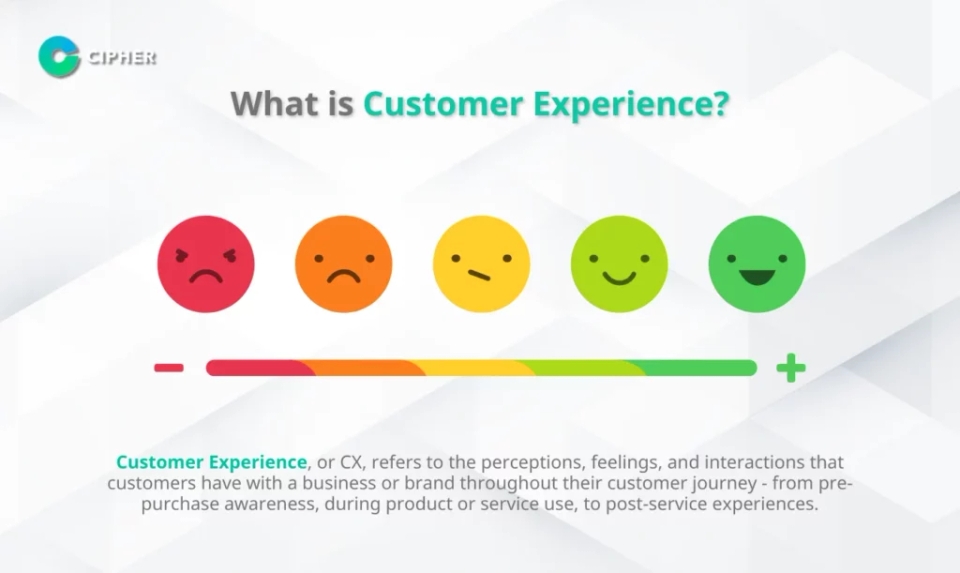
Customer Experience, or CX, refers to the perceptions, feelings, and interactions that customers have with a business or brand throughout their customer journey – from pre-purchase awareness, during product or service use, to post-service experiences. Good experiences result in customer satisfaction, loyalty, and potential recommendations to others. Conversely, negative experiences can lead to customer loss and damage to brand image. Leading organizations therefore prioritize finding good customer experience examples to adapt to their own businesses, often relying on comprehensiveCRM systems for their many benefits.
But many may wonder, how can we measure customer experience? It's an intangible thing, related to customer feelings and perceptions, with each person having different viewpoints.

Why is Measuring Customer Experience Important for Business?
Measuring and improving customer experience is important for businesses in several ways:
- Increases customer satisfaction: When you create good experiences, customers feel satisfied and return to use your services again
- Strengthens loyalty: Good experiences make customers feel valued and increase their chances of being loyal to your brand
- Increases sales and revenue: Customers with good experiences make purchasing decisions more easily, make repeat purchases, and recommend your brand to others
- Reduces customer loss: Improving experiences helps prevent the loss of customers, which comes at a high cost
- Creates market differentiation: In highly competitive markets, good customer experience is a key factor that makes brands stand out
- Develops brand image: Good experiences affect brand image in the long term
- Provides valuable insights: Measuring CX provides valuable information for improving products and services
What is Net Promoter Score (NPS)?
One of the popular indicators for measuring customer experience is Net Promoter Score, or NPS, developed by Fred Reichheld, an American businessman and thinker famous in the field of customer experience measurement systems.
NPS Score is a tool used to measure customer loyalty and predict business growth. Its main purpose is to measure long-term loyalty and the overall relationship customers have with the brand, making it one of the most widely popular methods for measuring customer experience today.
How to Calculate NPS
NPS calculation starts with asking customers a simple question:
"On a scale of 0-10, how likely are you to recommend our product/service/company to a friend or colleague?"
A score of 0 means "definitely would not recommend" and 10 means "definitely would recommend."
Customers are divided into 3 groups based on their scores:
- Promoters (9-10): Loyal customers who admire the brand and are ready to recommend it
- Passives (7-8): Satisfied customers but not enthusiastic enough to recommend
- Detractors (0-6): Dissatisfied customers who might speak negatively about the brand
Calculate NPS with the formula:% of Promoters – % of Detractors
The result ranges from -100 (everyone is a Detractor) to +100 (everyone is a Promoter).
Benefits of Using NPS to Measure Customer Experience
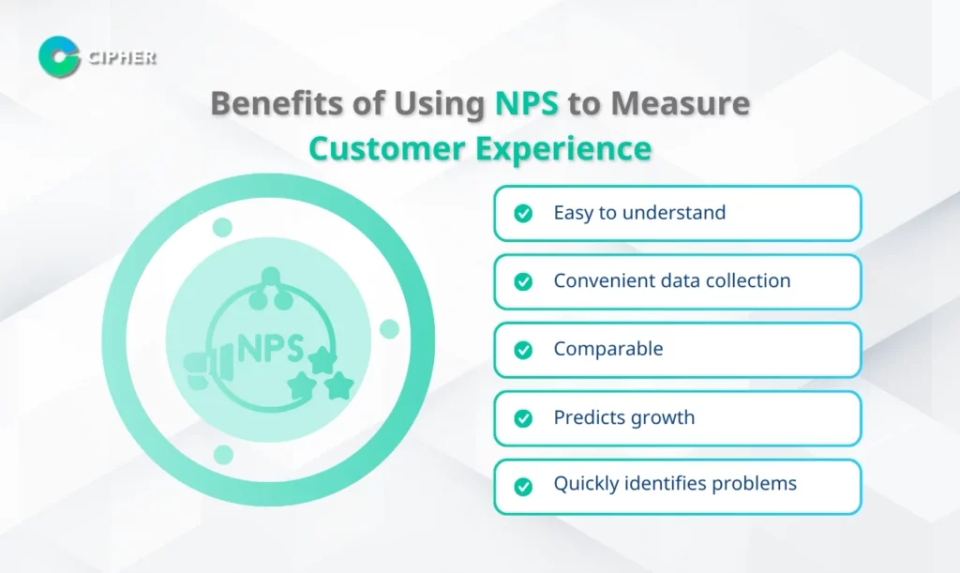
- Easy to understand: It's a single number that the entire organization can understand
- Convenient data collection: Uses just one question, easy for customers to answer
- Comparable: Can be compared with industry averages
- Predicts growth: Has a relationship with revenue growth
- Quickly identifies problems: Helps see issues that might make customers dissatisfied
How to Collect NPS Data Effectively
NPS data can be collected in several ways, each with different advantages:
- Website feedback pop-ups: Ask about satisfaction with using the website and ask why they gave that score
- Email: Send emails after customers use products or services to inquire about satisfaction
- Telephone: Call to ask for additional opinions about feelings after use
- Applications: Create surveys in mobile apps
- SMS: Send short messages with survey links
Importantly, besides asking for a 0-10 score, you should ask additional open-ended questions, such as "Why did you give this score?" to understand the reasoning behind the score.
Using NPS Results to Improve Business
Measuring NPS isn't just about knowing the numbers but using the results to improve the business through these methods:
- Analyze comments: Read customer comments in detail to understand problems and opportunities for improvement
- Solve Detractors' problems: Contact this group directly to fix problems and change negative feelings
- Increase Passives' satisfaction: Find ways to create additional impressions to turn them into Promoters
- Build loyalty among Promoters: Maintain satisfaction levels and encourage word-of-mouth
- Improve processes: Use data to improve products, services, and operations
Other Customer Experience Metrics Besides NPS
In addition to NPS, there are other indicators commonly used to measure customer experience:
1. Customer Effort Score (CES)
CES measures how much effort customers need to put into interacting with the company, such as seeking help, purchasing products, or solving problems. The goal is to assess how easy or difficult the various steps are.
CES often asks, "How easy did our company make it to solve your problem?" with scores ranging from "very easy" to "very difficult."
2. Customer Satisfaction (CSAT)
Customer Satisfaction measures customer satisfaction with products, services, or experiences received, focusing on feelings in short periods after activities. CSAT is an important tool for assessing customer satisfaction after interactions with the brand.
CSAT measurement often asks, "How satisfied are you with our product/service?" with scores on a scale, such as 1-5 or 1-10. Measuring customer satisfaction this way helps businesses understand customers' short-term reactions well.
Differences Between the Three Metrics
- NPSfocuses on measuring loyalty and long-term word-of-mouth tendencies
- CESfocuses on measuring the ease of using services or solving problems
- CSATfocuses on measuring satisfaction in short periods after interactions
Using these metrics together will help provide a more comprehensive understanding of customer experience.
Tools to Help Measure and Improve Customer Experience
Measuring and improving customer experience effectively requires appropriate tools, with several options available:
1. Google Analytics
Highlights: Analyzes website usage behavior, visits, traffic sources, and visitor-to-customer conversion ratesApplication: Track customer behavior on websites to improve UX/UI and marketing strategies
2. Appsflyer
Highlights: Analyzes mobile applications, user behavior, installations, and conversions from advertisingApplication: Understand user sources, track campaign performance, and increase app usage
3. VWO
Highlights: A/B testing to compare different website designs or contentApplication: Find designs or content that make customer experiences smooth and increase conversion rates
4. Contentsquare
Highlights: In-depth behavioral analysis, clicks, scrolling, and interaction on websitesApplication: Improve UX based on data showing how users interact with various elements
5. CRM Systems
Highlights: Comprehensive collection and analysis of customer dataApplication: Create a 360-degree view of customers, helping to better understand customer needs and behaviors
Choosing theright Content Management System (CMS)is another important factor that helps manage customer experiences on digital platforms more efficiently.
Strategies for Creating Good Customer Experience: Examples and Guidelines
Measuring with NPS and other indicators is just one part of improving customer experience. Businesses should have clear strategies for creating good experiences. If you want successful customer experience examples, consider these strategies:
- Empower employees: Give employees the authority to make decisions to solve customer problems immediately, without going through lengthy approval processes
- Value employee ideas: Employees who communicate directly with customers often understand customer problems and needs well. Listening to their opinions will help improve CX significantly
- Use technology appropriately: Implement AI, chatbots, or automated tools to respond to customers at all times, but consider the human aspect in services too
- Listen to feedback from all channels: Create seamless omnichannel experiences, allowing customers to contact through convenient channels and receive consistent service across all channels
- Make customers the center: Design work processes with customers in mind, not for organizational convenience
Having an appropriatemarketing mixwill help make customer experience creation strategies more effective.
Cipher's Services That Help Develop Customer Experience
Cipheris a comprehensive digital marketing agency that understands the importance of customer experience well. We offer various services that will help your business develop CX and measure results with NPS effectively:
1. In-depth Customer Data Analysis
We help you collect and analyze customer data to understand behavior, needs, and expectations, leading to creating experiences that better meet customer desires.
2. NPS Measurement System Design and Development
We help design NPS data collection systems suitable for your business, with easy-to-understand analysis and reporting systems.
3. UX/UI Development on Websites and Applications
Our expert team helps design and develop user experiences that are convenient, easily accessible, and impressive.
4. Omnichannel Marketing Strategies
We plan and implement marketing communications that are consistent across all channels to create seamless experiences for customers, with expertise insocial media managementandsocial media marketingthat will help your brand reach target audiences effectively.
5. Customer Experience Employee Training
We organize training to develop customer service skills for your employees, creating teams that truly focus on customers.
Conclusion: Excellent Ways to Measure Customer Experience with NPS
Net Promoter Score (NPS) is a powerful tool for measuring customer experience that helps businesses understand customer loyalty through just one simple question. Measuring NPS isn't merely about knowing the numbers but using that data to improve products and services to meet needs, making customers satisfied, returning to buy again, and recommending to others, which is a key to sustainable business growth in a highly competitive era.

Frequently Asked Questions
1. What's a good NPS score?
Answer: A good NPS score depends on the industry, but generally, a positive value is good (>0), a value from +50 is very good, and a value from +70 is excellent. However, what's important is continuously improving your NPS score and comparing it with competitors in the same industry.
2. How often should NPS surveys be conducted?
Answer: The frequency of NPS surveys depends on the business and customer touchpoints. For general businesses, it's recommended every 3-6 months. For service businesses, it might be done after transactions are completed, and for products with long usage cycles (such as software), it might be done 1-2 times per year.
3. How is NPS different from CSAT and CES, and when should each metric be used?
Answer: NPS measures loyalty and long-term recommendation tendencies, suitable for measuring overall relationships with brands. CSAT measures satisfaction in the short term after interactions, suitable for measuring satisfaction after specific service points. CES measures the effort customers need to make transactions, suitable for evaluating processes or services that aim to require minimal customer effort. Businesses should use these metrics together for a complete overview.
Share this article
Related articles
-
7 ข้อดีของ LINE OA ที่ช่วยให้ธุรกิจ SME เพิ่มยอดขายได้จริง
LINE OA เครื่องมือการตลาดสำคัญสำหรับธุรกิจ SME ที่ช่วยเพิ่มยอดขายได้จริง รวม 7 ข้อดีของ LINE Official Account พร้อมวิธีใช้งานให้ธุรกิจเติบโตเร็วขึ้น
Read more -
Influencer Marketing คืออะไร? กลยุทธ์การตลาดที่แบรนด์ต้องรู้
Influencer Marketing คืออะไร ทำความเข้าใจการตลาดผ่านอินฟลูเอนเซอร์ที่ช่วยให้แบรนด์เข้าถึงกลุ่มเป้าหมาย เพิ่มการรับรู้แบรนด์ และกระตุ้นยอดขายได้อย่างมีประสิทธิภาพ
Read more

