Why Do Some Websites Drop in Rankings After Google's AI Search Update?

The arrival of Google's AI Search update has fundamentally transformed the search landscape. Many websites that previously dominated top rankings have experienced significant drops, leaving website owners wondering, "Why have website rankings fallen after Google's AI Search update?" This article will help you understand the causes and how to adapt to this major shift, along withAI SEOtechniques to keep your website strong in the AI era.
What is AI Search? Understanding Before Solving
AI Search is a search system that uses artificial intelligence to analyze and process information, going beyond simple keyword-content matching to deeply understand meaning, context, and data relationships. This makes Google search results more accurate and relevant. If you're unfamiliar with SEO basics, you can read more in the Easy-to-Understand SEO Guide.
Google launched several important AI-driven features in 2024-2025, including:
- Google AI Overviews: Uses AI to summarize information from multiple sources into comprehensive answers. This AI Overview feature appears at the very top of search results.
- Google AI Mode: The latest AI Search update powered by Gemini 2.5 Pro, with 4 new features:
- Canvas: Helps with intelligent planning in a side panel
- Search Live: Real-time video search
- File uploads: Supports image and PDF uploads for analysis
Advanced understanding: Uses multiple technologies like Natural Language Processing, Machine Learning, Deep Learning, and Semantic Search to deeply understand user intent and deliver the most appropriate information.
Why Do Some Websites Drop in Rankings After Google's AI Search Update?
When Google implemented AI Search, many websites saw their rankings drop rapidly. Here are the key reasons:
1. Content Not Designed for AI Consumption
Websites with content not structured for easy AI reading are often overlooked, as AI Search looks for information that:
- Has clear structure using semantic HTML
- Has good content categorization
- Uses appropriate schema markup
- Directly answers user questions
Using SEO analysis tools likeAhrefscan help you identify these issues more clearly.
2. Insufficient Website Speed and Performance
AI Search gives special priority to fast-loading websites because it processes information in real-time:
- AI takes only 1-5 seconds to extract information from websites
- Sites with excessive JavaScript can slow down AI data extraction
- Websites not properly optimized for mobile display are at a disadvantage
3. Failure to Adapt to Algorithm Changes
Google constantly updates AI Search. Not tracking and adapting to these changes can lead to unintentional violations of requirements, such as:
- Content that doesn't meet E-E-A-T principles (Experience, Expertise, Authoritativeness, Trustworthiness)
- Using outdated or rule-breaking AI SEO techniques
- Not keeping content up-to-date
4. The Presence of AI Overviews in Search Results
Google AI Overviews typically appear at the top of search results, pushing organic results lower:
- Users may get answers from AI Overviews without clicking through to websites
- Websites whose information isn't featured in AI Overviews lose traffic
- SERP positions have changed, requiring users to scroll down to see organic results

Adapting to User Personas in the AI Search Era
In the AI Search era, user search behavior has changed significantly. Understanding your target audience's personas is more important than ever. Here are the main personas to consider when implementing AI SEO:
1. Conversational Searchers
Characteristics:
- Search using long question phrases or natural conversational sentences
- Often use Voice Search
- Like to ask follow-up questions on the same topic
Adaptation Strategies:
- Create question-answer format content
- Use natural language in content writing
- Include long-tail keywords that form questions in headings
- Use FAQ Schema to help AI Overviews easily extract your information
Example search query: "How to easily fix website ranking drops after Google AI update at home"
2. Goal-Oriented Searchers
Characteristics:
- Have clear search objectives
- Want direct, straightforward information
- Often use specific questions or short keywords
Adaptation Strategies:
- Create direct, easy-to-understand content
- Use clear bullet points and headings
- Focus on providing complete but concise information
- Use content-specific Schema Markup
Example search query: "How to fix SEO ranking drop" or "Schema Markup for AI Search"
3. Comparative Searchers
Characteristics:
- Want to compare options before making decisions
- Often use search terms with "vs", "compare", "differences"
- Prefer comparison tables and reviews
Adaptation Strategies:
- Create clear comparison tables
- Use Pros and Cons lists
- Provide balanced comparative analysis
- Use Table Schema Markup to help AI better understand comparison data
Example search query: "Google AI Search vs Traditional SEO" or "How AI Overviews differ from Featured Snippets"
4. Research-Oriented Searchers
Characteristics:
- Want in-depth and comprehensive information
- Spend more time reading content
- Often search multiple keywords on the same topic
Adaptation Strategies:
- Create comprehensive, deep content
- Reference credible sources
- Include statistics and case studies
- Create "Ultimate Guide" or "Complete Guide" content
Example search query: "Analysis of Google AI Search impact on the SEO industry in 2025"
5. Urgent Searchers
Characteristics:
- Need immediate answers
- Often use words indicating urgency like "urgent", "immediate fix"
- Have limited reading time, need actionable information
Adaptation Strategies:
- Use clear headings and key points
- Include a Quick Answer Box at the top of articles
- Provide clear, easy-to-follow problem-solving steps
- Add "Jump to" links for quick navigation to relevant sections
Example search query: "Urgent SEO fix for ranking drop after Google update" or "Make website AI Search compatible within 24 hours" Adapting your content to these different personas will help your website better meet user needs, which is something AI Search highly values. This increases the chances of your content being selected for AI Overviews.
How to Check and Fix Website Ranking Issues
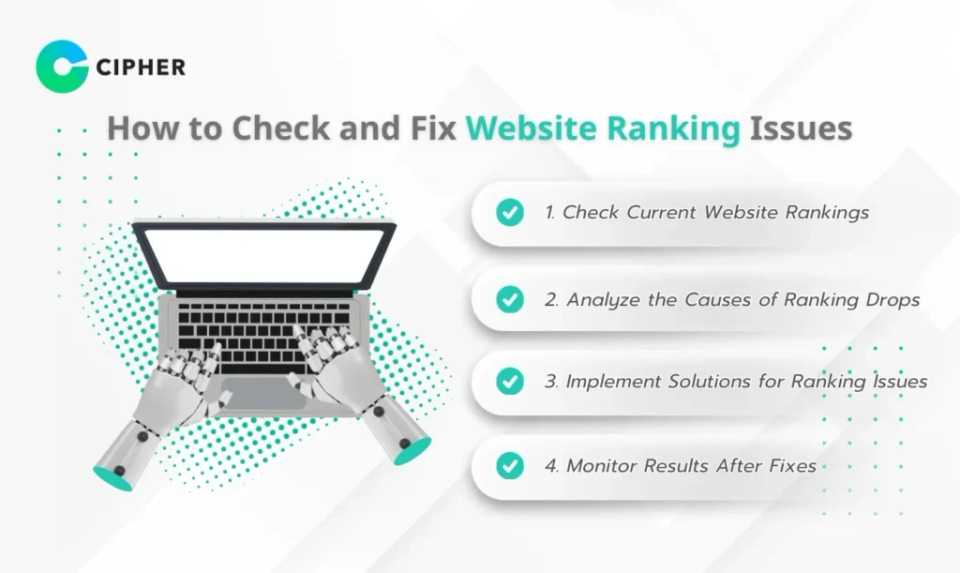
If you find your website has dropped in rankings after Google's AI Search update, follow these steps:
1. Check Current Website Rankings
First, make sure your website rankings have actually decreased:
- Compare weekly website traffic data before and after the ranking drop
- Use Rank Tracker Tools to help analyze
- Determine whether the ranking decrease is due to your website or because competitors have better AI SEO
2. Analyze the Causes of Ranking Drops
Once you've confirmed a ranking drop, analyze the potential causes:
Internal website changes?
- URL changes
- UX/UI website adjustments
- Broken links (deleted links, incorrect redirects)
- System bugs
Search Engine updates?
- Check news about Google's AI Search updates
- Observe if competitors' website rankings have also changed
Manual Actions?
- Check Google Search Console under "Securities and Manual Actions" tab
- Look for spam links or content violating guidelines
3. Implement Solutions for Ranking Issues
After identifying the causes, take immediate action:
- If it's a website issue like broken links, bugs, or Manual Actions, fix them quickly
- If it's due to Google's AI Search update, you may need to monitor results for a period (about 2+ weeks)
- Improve your website to better support AI Search (discussed in the next section)
If you need tools to help with comprehensive SEO analysis, tryYoast SEOwith its dedicated website problem-checking features.
4. Monitor Results After Fixes
After implementing fixes, continuously track results:
- Monitor website rankings after fixes
- Observe competitor changes
- Follow news about Google's AI Search updates
- Look for new ways to improve website rankings
How to Optimize Your Website for AI Search
To ensure your website maintains good rankings in Google searches even in the AI Search era, follow these guidelines:
1. Increase Website Speed – Response Under 1 Second
AI Search and search tools prioritize fast-loading websites. Try these approaches:
- Use CDN (Content Delivery Network) to reduce loading time
- Enable Browser Caching to reduce repeated file loading
- Use Lazy Loading to only load what users want to see
- Compress CSS, JavaScript, and images with Gzip or WebP
- Use high-quality hosting with good server speed
2. Use Metadata and Schema Markup – Help AI Understand Content Structure
Schema Markup is special code that helps AI Search better understand your content context:
- Article Schema – Define article structure
- FAQ Schema – Display Q&A for easy extraction by Google AI Overview
- Product Schema – Help AI understand product information like prices and reviews
- Event Schema – Use for activities or promotions that need frequent updates
Additionally, use Metadata such as Title, Meta Description, and Open Graph Tags to help AI Overview correctly display your website information.
3. Adjust Content Structure for Easy AI Reading
Clean and clear data structure helps AI Search better understand your content:
- Use HTML and Markdown instead of JavaScript for content display
- Use semantic tags like <article>, <section>, <nav> to help AI understand content order
- Show full-page content, don't hide content behind "Read more" buttons
- Use RSS Feed or API to allow AI to directly extract information
4. Write High-Quality Content That Addresses User Needs
AI Search will select quality content that answers users' search queries:
- Create useful content that covers important aspects
- Use question phrases in Heading Tags, like "What is Google AI Overview?"
- Design easy-to-read content using sub-headings and bullet points
- Keep paragraphs concise
- Regularly update content and clearly indicate the last update date
If you want to increase sales with AI SEO, check out additional guidelines in theSales Growth Guide.
5. Properly Manage AI Crawlers
AI Crawlers are programs that help AI Search access and understand website content:
- Don't block AI Crawlers in Cloudflare or AWS WAF
- Set up appropriate robots.txt, allowing AI Crawlers to access your website
- Differentiate between search AI (like PerplexityBot, AndiBot) and data collection AI (like GPTBot, Google-Extended)
- Create llms.txt file to specify how AI can use your information
6. Use Sitemap and Request Indexing
Making Google understand your website structure helps AI Search better utilize your information:
- Create and regularly update Sitemap.xml
- Submit Sitemap to Google Search Console and Bing Webmaster Tools
- Use Request Indexing in Google Search Console to inform Google about new content updates
- Segment your Sitemap by content type, such as articles, products, videos, or images
AI-Ready SEO Services from CIPHER
In an era where Google's AI Search updates are changing search methods, rapid adaptation is crucial.CIPHER companyis ready to help keep your website strong even in the AI era with these services:
1. AI Search Audit – Check Readiness for AI
We'll thoroughly examine your website to identify areas that need improvement to support AI Search, providing a clear report on specific solutions.
2. AI Schema Implementation – Help AI Understand Your Website
Our expert team will implement appropriate Schema Markup for your content, helping Google AI Overview understand and correctly display your information.
3. AI-Optimized Content – Create Content That AI Loves
Content creation services specifically designed for AI Search with clear structure, addressing user needs, and aligning with E-E-A-T principles.
4. AI Search Monitoring – Continuous Result Tracking
We track and report your website's performance on AI Overview continuously, adjusting strategies to accommodate Google's AI Search updates.
5. Multimodal SEO Strategy – Ready for All Search Types
AI SEO strategy planning that covers text, image, and voice searches, preparing your website for all future Google search formats. If you're interested inSEO services from CIPHER, contact us for a consultation.
Conclusion
Google's AI Search update presents both challenges and new opportunities for website owners. Adapting to AI technology and focusing on creating high-quality content with clear structure and fast loading will help maintain website rankings. While clicks may decrease, visitor quality will increase, positively affecting long-term business goals. With the right AI SEO strategy, your website can not only survive but thrive in this rapidly changing digital era.

Frequently Asked Questions
How does AI Search affect website traffic?
AI Search may reduce overall click-through rates as users get answers from AI Overviews without clicking through to websites. However, the clicks you do get will be higher quality, as users have genuine interest in your content. Focus on business goals (like sales or subscriptions) rather than just traffic numbers.
What type of content is likely to be featured in AI Overviews?
Content with clear structure, appropriate Schema Markup, addressing user needs, and following E-E-A-T principles has a better chance of being selected. Especially question-answer format content, how-to guides, and in-depth, trustworthy information.
Is AI SEO necessary if I already have traditional SEO?
Adaptation is necessary because AI SEO builds upon traditional SEO, focusing on making content AI-understandable, not just keyword matching. Adding Schema Markup, adjusting content structure, and understanding different user personas will help your website survive in the AI Search era.
How can I tell if my website rankings dropped because of AI Search?
Check for ranking trends decreasing after Google's AI Search update, significant traffic reduction, changes in Impressions and CTR in Google Search Console, and the appearance of AI Overviews in search results for keywords that previously ranked well.
Share this article
Related articles
-
7 ข้อดีของ LINE OA ที่ช่วยให้ธุรกิจ SME เพิ่มยอดขายได้จริง
LINE OA เครื่องมือการตลาดสำคัญสำหรับธุรกิจ SME ที่ช่วยเพิ่มยอดขายได้จริง รวม 7 ข้อดีของ LINE Official Account พร้อมวิธีใช้งานให้ธุรกิจเติบโตเร็วขึ้น
Read more -
Influencer Marketing คืออะไร? กลยุทธ์การตลาดที่แบรนด์ต้องรู้
Influencer Marketing คืออะไร ทำความเข้าใจการตลาดผ่านอินฟลูเอนเซอร์ที่ช่วยให้แบรนด์เข้าถึงกลุ่มเป้าหมาย เพิ่มการรับรู้แบรนด์ และกระตุ้นยอดขายได้อย่างมีประสิทธิภาพ
Read more

